
Our historical audiovisual projects
Every Epopeia Studio historical audiovisual project is a rigorous approach to the past. We don't just show history: we reconstruct it with documentary accuracy, creative direction and advanced technology, including artificial intelligence.
From narrative videos to illustrated and animated pieces, each one audiovisual historical reconstruction combines rigorous research and careful audiovisual production. The aim is to offer memorable experiences that allow us to understand and feel each historical moment.
On this page you will find a selection of audiovisual projects with Epopeia Studio's stamp. Through them we show how we transform documented historical facts into narratives with criteria, clarity and aesthetic strength.
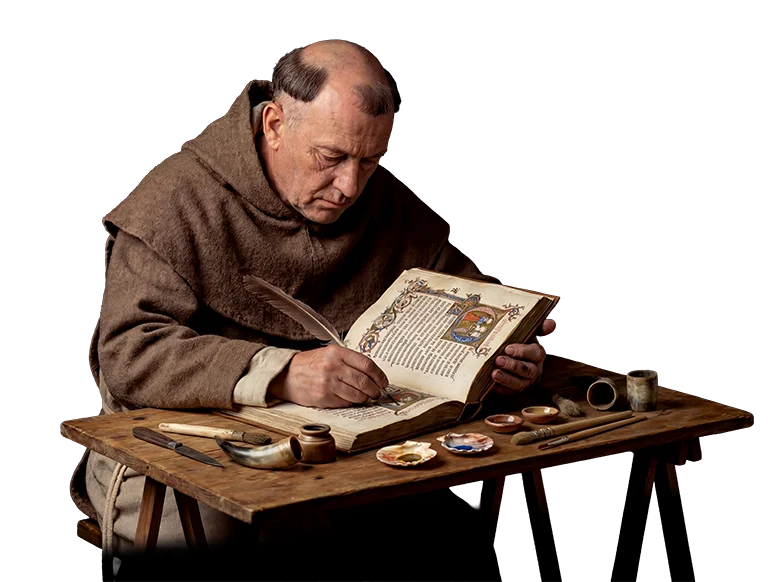
Historical videos with AI
We explore different formats of historical video to reconstruct events of the past with rigour. These include short documentaries, cinema-style video, illustrated video and animated video. We integrate generative artificial intelligence models, 3D production tools and advanced digital post-production systems. In this way, we can represent historical processes and contexts more accurately.
Here are some of our most representative projects, where history, creativity and technology merge to offer new ways of understanding the past.
Ancient Rome
This project offers a visual journey through everyday life in Ancient Rome. Different scenes show the customs that defined the Roman Empire: the centrality of public life, the daily ritual of the baths, the opulence of the banquets and the amphitheatre as the epicentre of collective entertainment.
Each scene has been designed on the basis of documented historical evidence. The aim is to offer a faithful approximation of what life was really like in imperial Rome.
Traditional Cantonese dance
This historical audiovisual project depicts a traditional Cantonese dance performed by a woman in honour of a classical poem. The choreography, costumes and staging evoke an artistic expression deeply linked to the cultural tradition of southern China.
In addition, each gesture, movement and visual element has been constructed on the basis of documented references. In this way, the cultural and ceremonial context that gave meaning to this artistic practice rooted in tradition is recreated.
Ming Dynasty
Under the skies of Nanjing, the imperial capital during the Ming dynasty, the city displayed an intense urban life marked by trade, commerce and complex social dynamics.
This illustrated video recreates this atmosphere with a carefully chosen setting. Through its scenes, it offers an approximation to the daily pulse of the city and the organisation of its spaces and relationships.
The result is a historical audiovisual project that immerses the viewer in one of China's golden ages (1368-1644), a period of cultural boom, economic development and artistic splendour.
James I of Aragon
In this animated video, James I of Aragon (Jaume I) and his entourage talk as they plan the strategy for the reconquest of Valencia. The episode is set in the final stages of the siege of the city.
Thanks to the animation, the viewer can understand the decisions and tensions that preceded the taking of 1238.
Likewise, this historical audiovisual project has a clear didactic approach. Therefore, the piece becomes a useful and attractive pedagogical tool to explain strategic processes and historical thinking in the classroom.
A brief history of the world
From the extinction of the dinosaurs to some of the great milestones in human history, this historical audiovisual project proposes a journey through key moments that have marked the evolution of our world.
The piece shows the emergence of the Homo sapiens, The first civilisations, the birth of the first civilisations, the medieval crusades, the conflicts of the 20th century and the arrival of mankind on the moon.
Each scene functions as a fragment of a larger narrative. Taken together, the short documentary combines visual coherence to offer a clear view of the overall story.
Suzhou Market
Amid silent canals and stone lanes, Suzhou's market awakens to the first sounds of the day. Traders unfurl silk fabrics, craftsmen work with precision and travellers wander through passages filled with the aromas of tea, spices and damp wood.
This historical audiovisual project reconstructs the daily life of the market. It also shows gestures, trades and the urban organisation of the city, considered the cradle of the Wu culture.
Each scene of this short documentary film-style film combines historical accuracy and visual composition. In this way, it provides a clear and structured view of the historical context of the city.
The secret of the purple of Tyre
This short film-style documentary video reconstructs with historical accuracy the process of obtaining Tyrian purple, the most valuable dye in the ancient world, made by the Phoenicians in the city of Tyre. It is believed to have been used as far back as Crete around 1600 BC.
The piece shows the processes, tools and rituals surrounding the creation of this coveted pigment, whose colour could range from purplish red to purple, and which symbolised power and prestige. This historical audiovisual project reveals how the Phoenicians transformed molluscs into a legendary dye, connecting with the history, culture and ingenuity of antiquity.
Historical photographic restoration with AI
Historical photographs are not just images: they are also incomplete fragments of our collective memory. However, many of them have lost some of their quality over time.
Through historical photographic restoration, we recover their depth, their context and their visual power. In this way, the past can be seen again with greater clarity.
Mata Hari
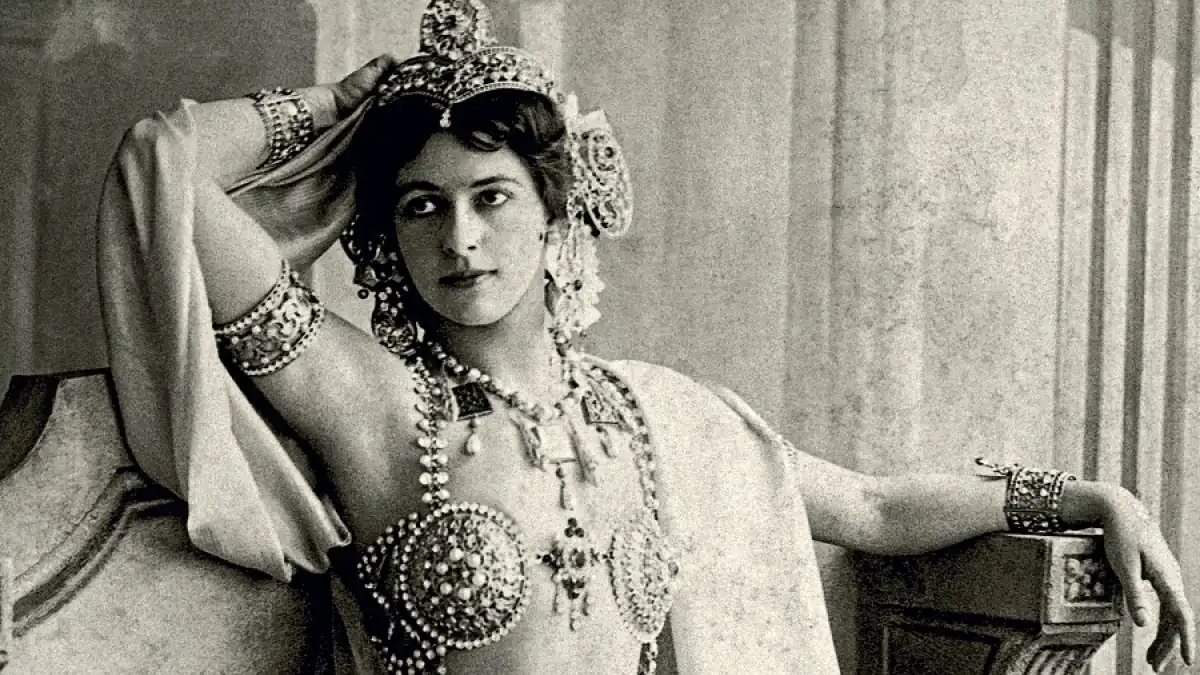
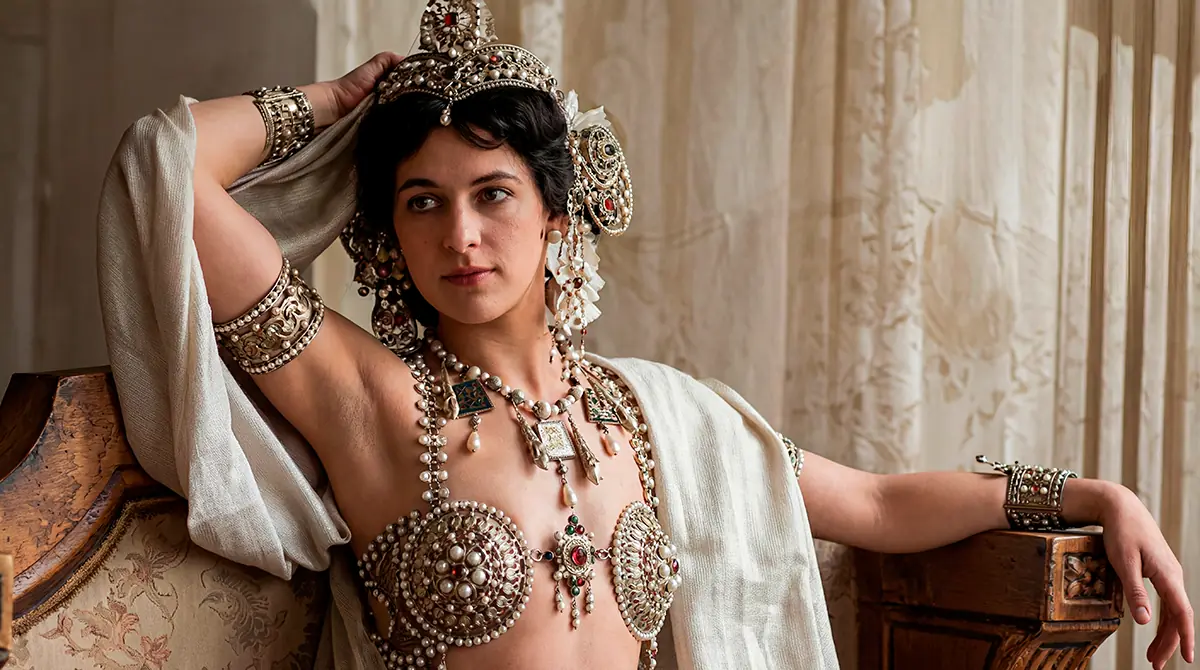
Margaretha Geertruida Zelle, known as Mata Hari (1876-1917), was one of the most enigmatic figures of the First World War. Her figure was linked to espionage and an intense media construction of her public image.
In this historic photographic restoration, based on an original image from 1907, the dancer appears in an elaborate oriental costume. The scene focuses on her stage aesthetics and the cultural context that contributed to building her myth.
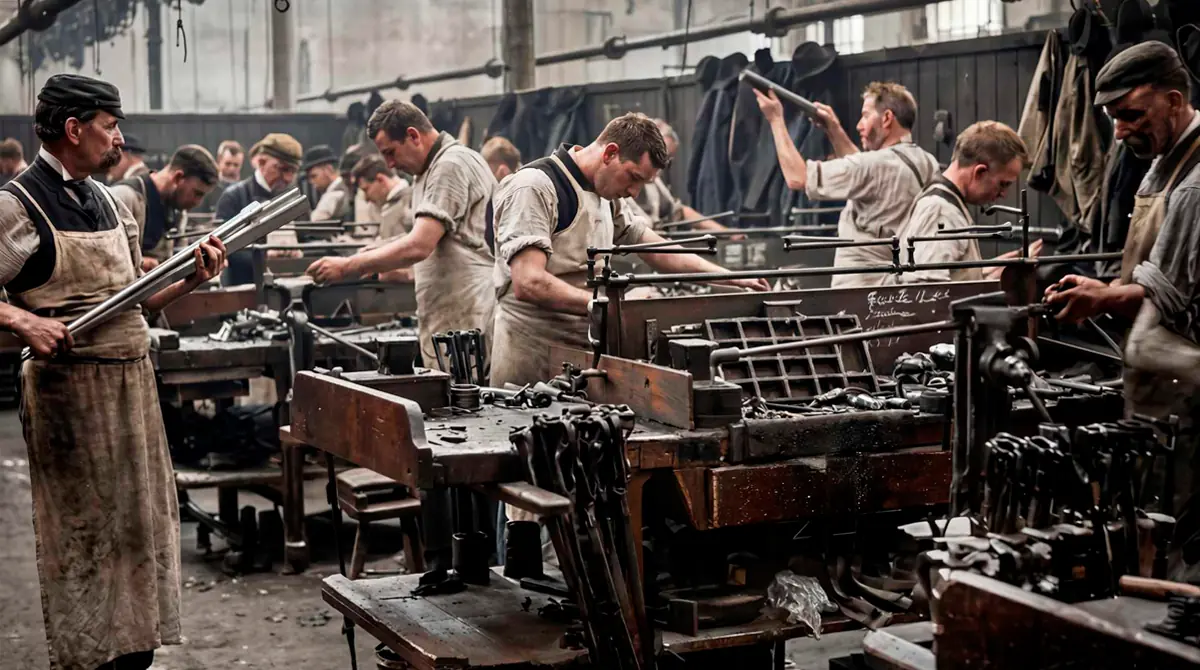
Factory in the Industrial Revolution
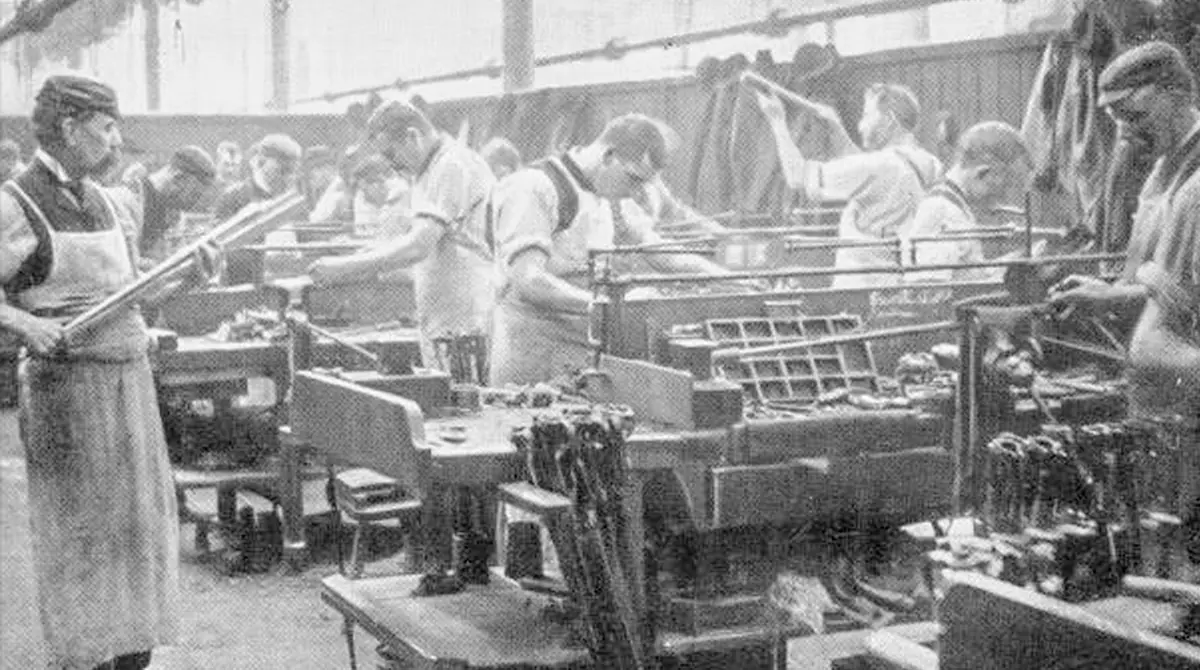
The Industrial Revolution (1760-1840) profoundly transformed work, production and social organisation in the 19th century.
This historic photographic restoration documents the manufacturing environment of the time. It highlights the dominant presence of machinery and the labour dynamics that defined a period of rapid change.
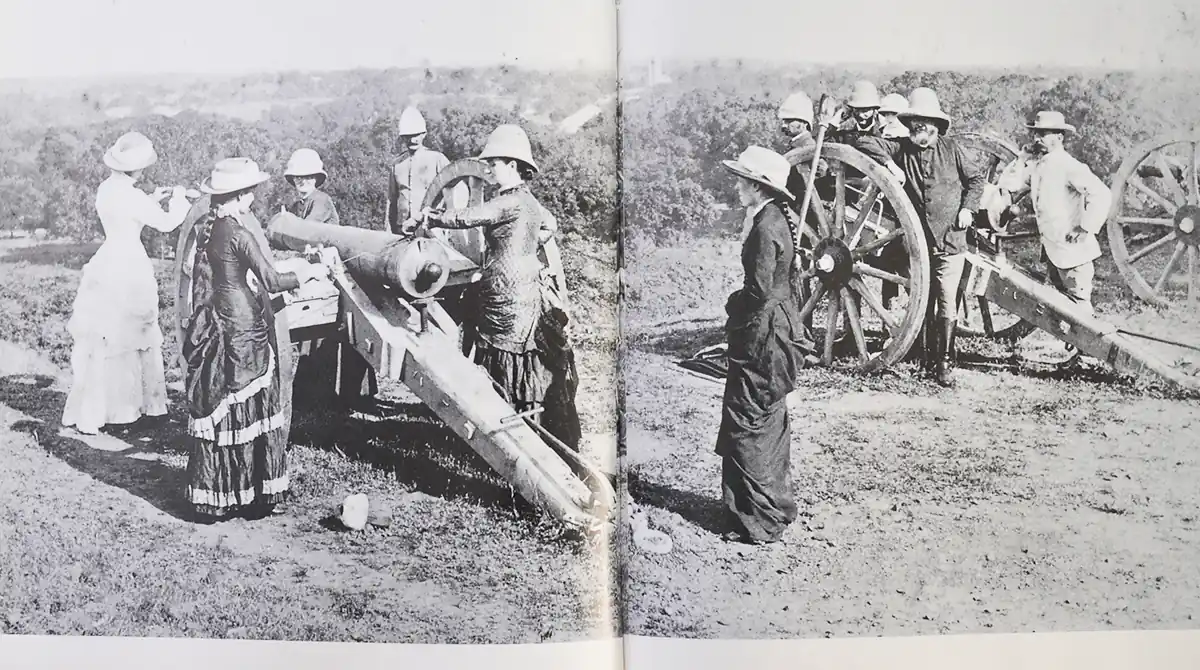
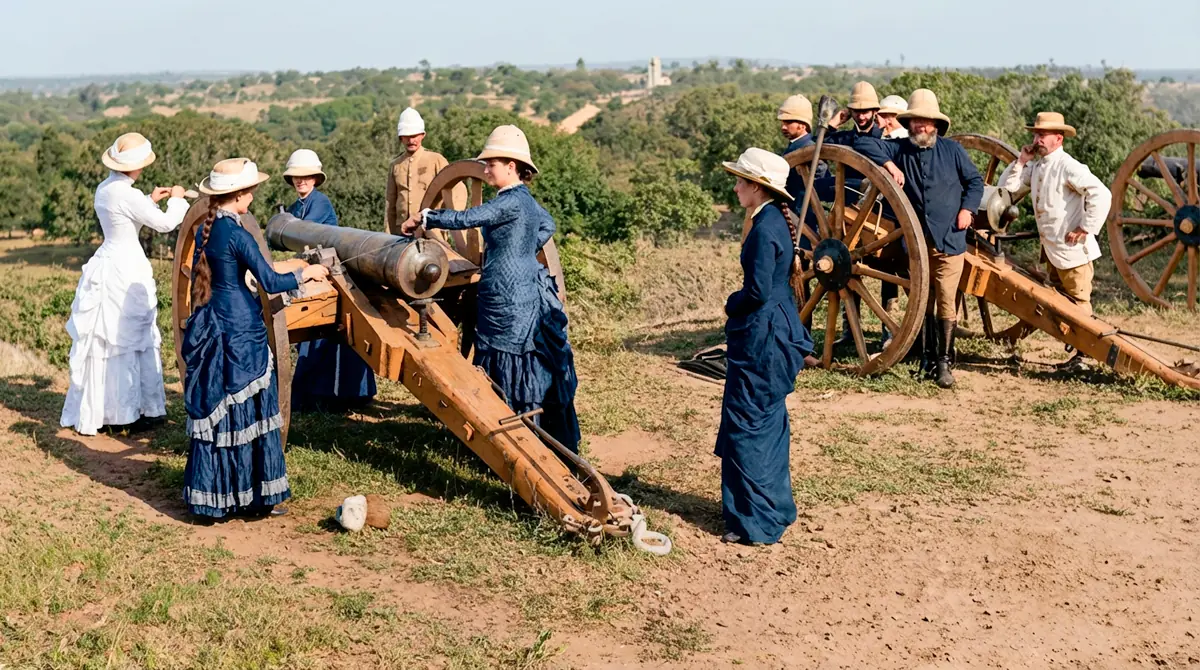
British Empire in India
India was considered the jewel in the crown of the British Empire and the strategic axis of its colonial expansion between 1858 and 1947.
Based on an image taken in 1870 in Nagpur - collected in British Empire from Photographs: India, by John Fabb - we produced this historic photographic restoration. The scene shows a group of Europeans standing next to artillery pieces.
On the other hand, the image reflects the power dynamics of the colonial context: while the men watch, the women play the role of artillery servants.
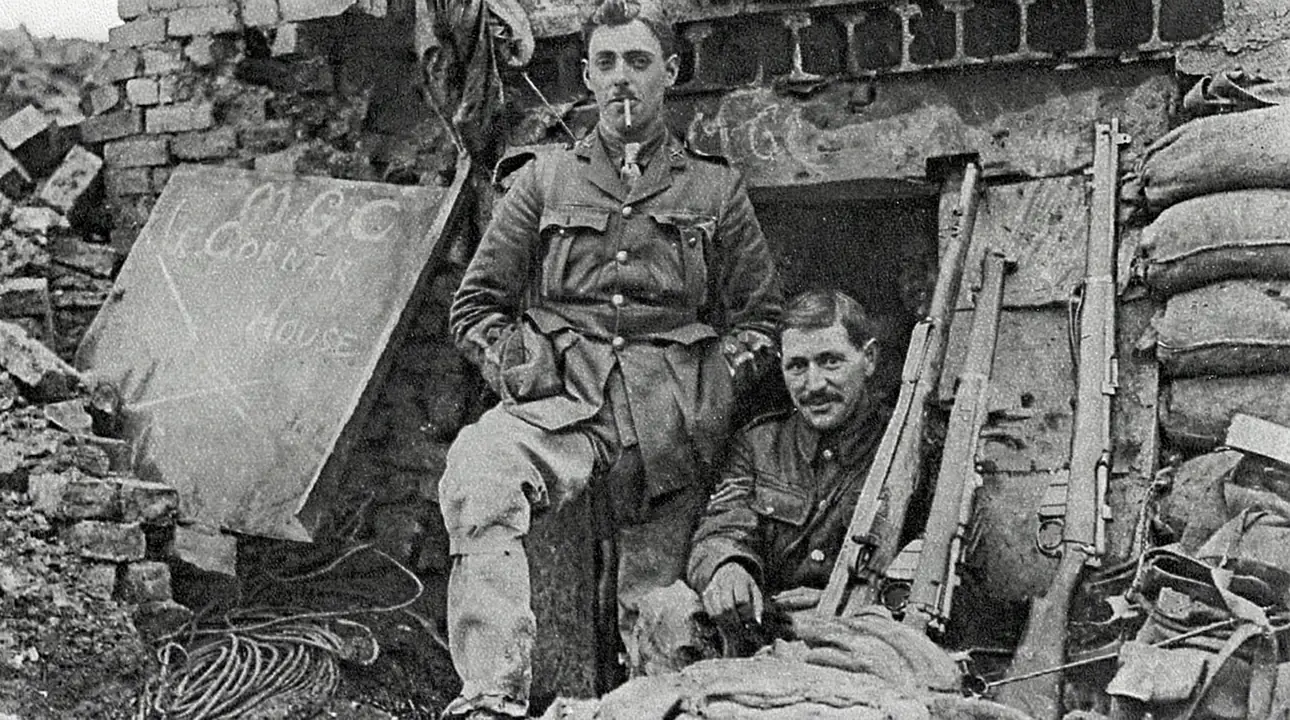
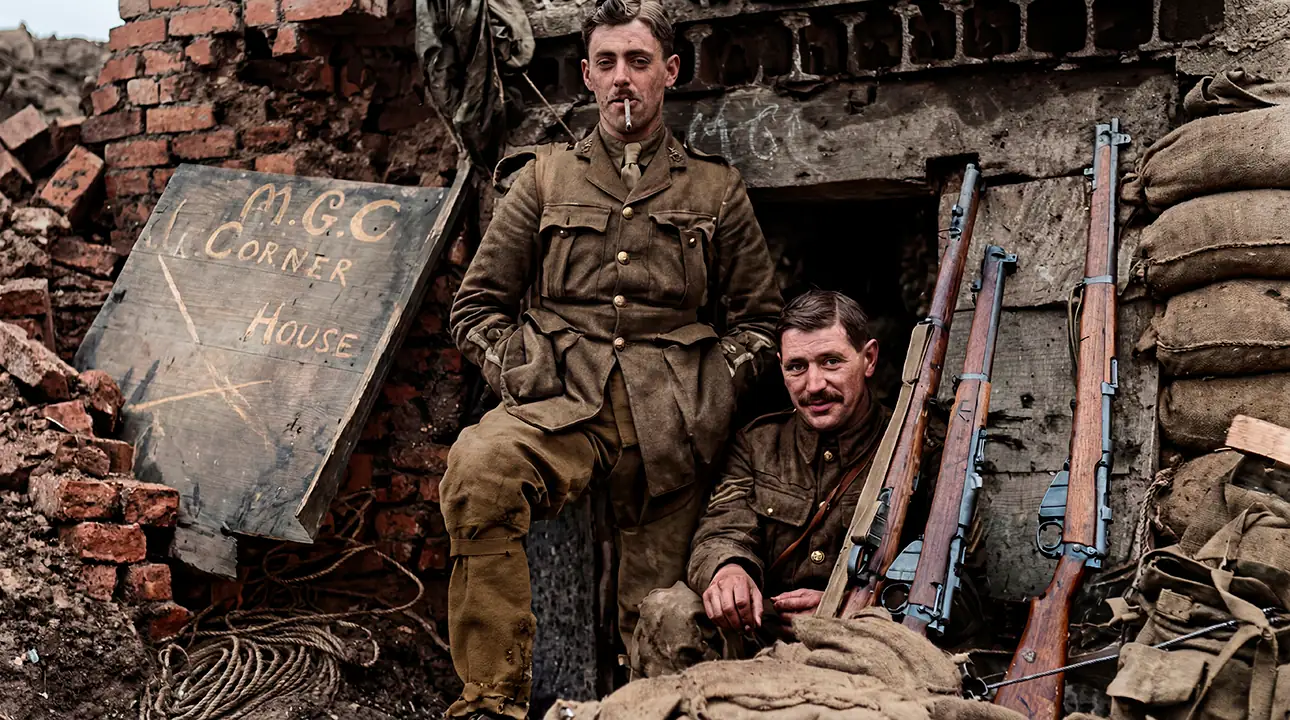
Soldiers in the First World War
World War I (1914-1918), also known as the Great War, caused more than 10 million military deaths and more than 6 million civilian casualties.
Among its bloodiest episodes was the Battle of the Somme (1916), one of the longest engagements of the conflict. More than a million casualties were recorded on both sides.
In this historic photographic restoration, a lieutenant and a sergeant of the Machine Gun Corps British pose in front of a captured German shelter (dugout). The image was taken by Ernest Brooks in November 1916 on the Beaumont-Hamel front in the Somme region of France.
Interactive historical objects with AI
Interactive historical objects make it possible to observe and study artefacts from the past in great detail.
Thanks to interactive 3D visualisation, it is possible to rotate, zoom in and examine each piece from different angles. In this way, museums and heritage centres can offer new ways of disseminating, studying and interpreting historical heritage.
Busto de mujer romana
This modelo 3D interactivo permite observar en detalle un busto femenino de época romana. La pieza puede girarse y ampliarse para examinar el rostro, el elaborado tocado, los pendientes, el collar y los pliegues de la vestimenta.
La visualización permite apreciar especialmente los restos de policromía conservados en la escultura, mostrando cómo muchas obras de la Antigüedad fueron concebidas originalmente con superficies coloreadas y una apariencia muy distinta a la del mármol desnudo que solemos asociar al mundo clásico.
La reconstrucción tridimensional facilita así el estudio de sus rasgos, ornamentación y técnicas decorativas, convirtiéndose en una herramienta útil para museos, proyectos patrimoniales y exposiciones digitales.
Egyptian statuette
This interactive Egyptian statuette can be rotated and enlarged to analyse its proportions, iconography and decorative details.
The 3D visualisation allows the piece to be contextualised within its period and culture. It also shows materials, symbolism and possible ritual or everyday uses.
It is therefore an educational tool that facilitates the understanding of Egyptian heritage in a clear and visual way.
360º Spaces
We build immersive experiences that transcend the screen. By creating 360° spaces, we enable your projects to be inhabited, walked through and felt from anywhere in the world. It's not just about showing a place, but about removing physical barriers to emotionally connect your clients to the architecture, design and essence of a museum or other cultural space through a high-fidelity digital window.